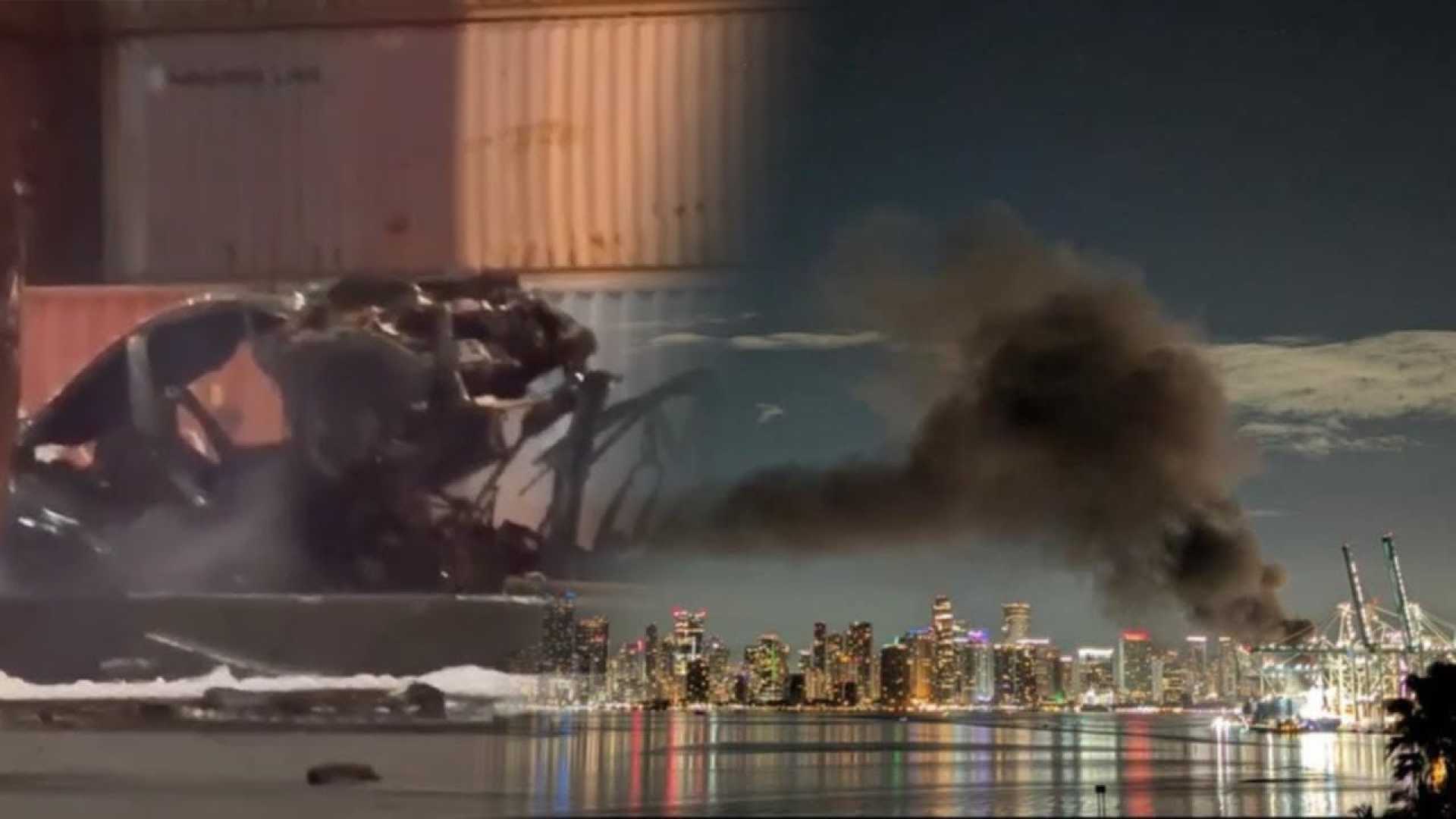
You’ve probably seen the grainy footage or heard the rumors floating around. When people talk about a Port of Miami explosion, there is usually a lot of confusion about which event they are actually referring to. Was it a freak accident? A localized fire that looked like a bomb? Or maybe a scene from a high-budget action movie that locals caught on their iPhones? The truth is, while "Port of Miami explosion" sounds like the plot of a Michael Bay flick, the reality usually boils down to industrial mishaps or specific incidents involving fuel and machinery that provide a sobering look at how dangerous maritime hubs can be.
It happened.
Firefighters rushed to the scene. Smoke billowed over the skyline. People on the MacArthur Causeway pulled over to record the chaos. But to understand the weight of these events, you have to look at the Port of Miami—PortMiami—not just as a cruise terminal, but as a massive, high-pressure industrial machine where millions of tons of cargo and thousands of gallons of fuel are moving at any given second.
The Reality Behind the Port of Miami Explosion Reports
Most of the time, when the internet starts buzzing about a Port of Miami explosion, they are talking about a specific, terrifying incident involving a fuel farm or a boat fire that escalated quickly. Take, for instance, the recurring issues with vessel fires. PortMiami is the "Cruise Capital of the World," but it is also a hub for smaller freighter traffic and maintenance.
In recent years, we’ve seen incidents where localized explosions occurred on private vessels or near the cargo terminals. One of the most notable events involved a massive fire on a barge that sent shockwaves through the local community. It wasn't just a small flame. We are talking about a situation where the structural integrity of the vessel was compromised, leading to secondary blasts that sounded like thunder across South Beach.
Why does this keep happening?
Honestly, it’s a numbers game. With the sheer volume of traffic—over 7 million cruise passengers and millions of tons of cargo annually—the margin for error is razor-thin. When you mix heavy machinery, pressurized containers, and volatile fuels, a single spark from a welding torch or a short circuit in an engine room can turn a routine Tuesday into a multi-agency emergency response.
Breaking Down the Logistics of Maritime Blasts
When an explosion occurs at a port, it’s rarely just a "boom" and then it's over. It’s a sequence. First, you usually have the "primary" event, which might be a gas leak or a chemical reaction in a shipping container. Because containers are packed so tightly, the heat can't escape. This creates a pressure cooker effect.
- Thermal runaway: This is a nightmare for PortMiami officials. If a container full of lithium-ion batteries or certain chemicals starts to overheat, it can ignite adjacent containers.
- Fuel transfer accidents: Bunkering—the process of fueling these massive ships—is a high-risk operation. If a hose snaps or a valve fails, you have thousands of gallons of combustible liquid looking for a reason to ignite.
The Impact on Local Infrastructure and Safety
The Port of Miami explosion scares aren't just about the immediate fire. They ripple through the entire city's economy. When an incident occurs, the tunnel—the massive $1 billion project that connects the port to the highway—often has to be monitored or shut down. Think about that. You have a single point of failure that can paralyze downtown Miami traffic in minutes.
Miami-Dade Fire Rescue (MDFR) actually has specialized units just for this. They don't just show up with a ladder truck. They have fireboats like the Harry Williams and the Florida 1 that can pump thousands of gallons of seawater per minute. Seeing these boats in action is a reminder of how much tech goes into keeping the port from literally going up in smoke.
People forget that PortMiami is an island. Dodge Island, specifically. This geography makes any Port of Miami explosion a logistical puzzle for first responders. You can't just drive a thousand trucks onto the island without creating a bottleneck. They have to coordinate with the U.S. Coast Guard, port security, and sometimes even the military if the cargo is sensitive.
What People Get Wrong About Port Safety
A common misconception is that these explosions are usually caused by "terrorism." The data doesn't support that. Most of the time, it’s boring, preventable human error. It’s a guy forgetting to grounded a wire. It’s a seal that hasn’t been replaced in five years. It’s a container that was mislabeled at its point of origin in another country, so the dockworkers didn't know they were handling something highly reactive.
Another myth? That the cruise ships themselves are the biggest risk. Actually, modern cruise ships are some of the safest floating structures on Earth. They have redundant fire suppression systems that can isolate a fire to a single room. The real danger usually lies in the "back-of-house" operations—the cargo side of the port where hazardous materials are moved.
The 2023 Fisher Island Incident and the Port Connection
If you were searching for "Port of Miami explosion" recently, you might actually be thinking of the tragic 2023 incident where a car went off the Fisher Island ferry. While not a "port explosion" in the industrial sense, the proximity to the PortMiami channel and the massive emergency response—complete with divers and flashing lights visible from the cruise terminals—often gets lumped into the same category in the public memory.
It shows how sensitive the area is. Any loud noise or massive plume of smoke in that specific corridor of the Atlantic creates an immediate "check the news" moment for millions of Miamians.
How to Stay Safe and Informed During Port Emergencies
If you live in Miami or are planning a cruise, you shouldn't live in fear of a Port of Miami explosion. But you should be smart. The port has an incredibly robust alert system.
- Sign up for Miami-Dade Alerts. This is the fastest way to know if the tunnel is closed or if there’s a hazardous material leak.
- Watch the smoke. If you see black smoke, stay upwind. Industrial fires at ports often involve plastics and chemicals that you definitely don't want in your lungs.
- Follow the USCG Southeast on social media. They are the ones who actually control the water traffic. If they shut down the channel, nothing moves.
Actionable Insights for Travelers and Locals
When a Port of Miami explosion or fire is reported, the first thing you should do is check the "Notice to Mariners" or local news before heading to the terminal. If you are a traveler, keep your documents in a waterproof, fire-resistant bag. It sounds paranoid until you’re the one standing on a pier watching a fire break out three piers down.
For those interested in the technical side, the port is constantly upgrading its "Fire Protection Master Plan." This involves installing more high-capacity hydrants and improving the sensors that detect heat in container stacks before a flame even appears.
Basically, the port is safer today than it was ten years ago, but the risks are inherent to the industry. You’re dealing with the intersection of global commerce and volatile energy. Sometimes, things go wrong. When they do, the goal is containment and communication.
If you are looking for real-time updates on port status or historical data on maritime safety in Florida, your best bet is to look at the National Transportation Safety Board (NTSB) marine reports. They provide the "black box" style breakdown of what went wrong, which is usually way more insightful than a 30-second clip on the nightly news. Stick to the data, ignore the sensationalist rumors, and always have a backup route out of downtown Miami.