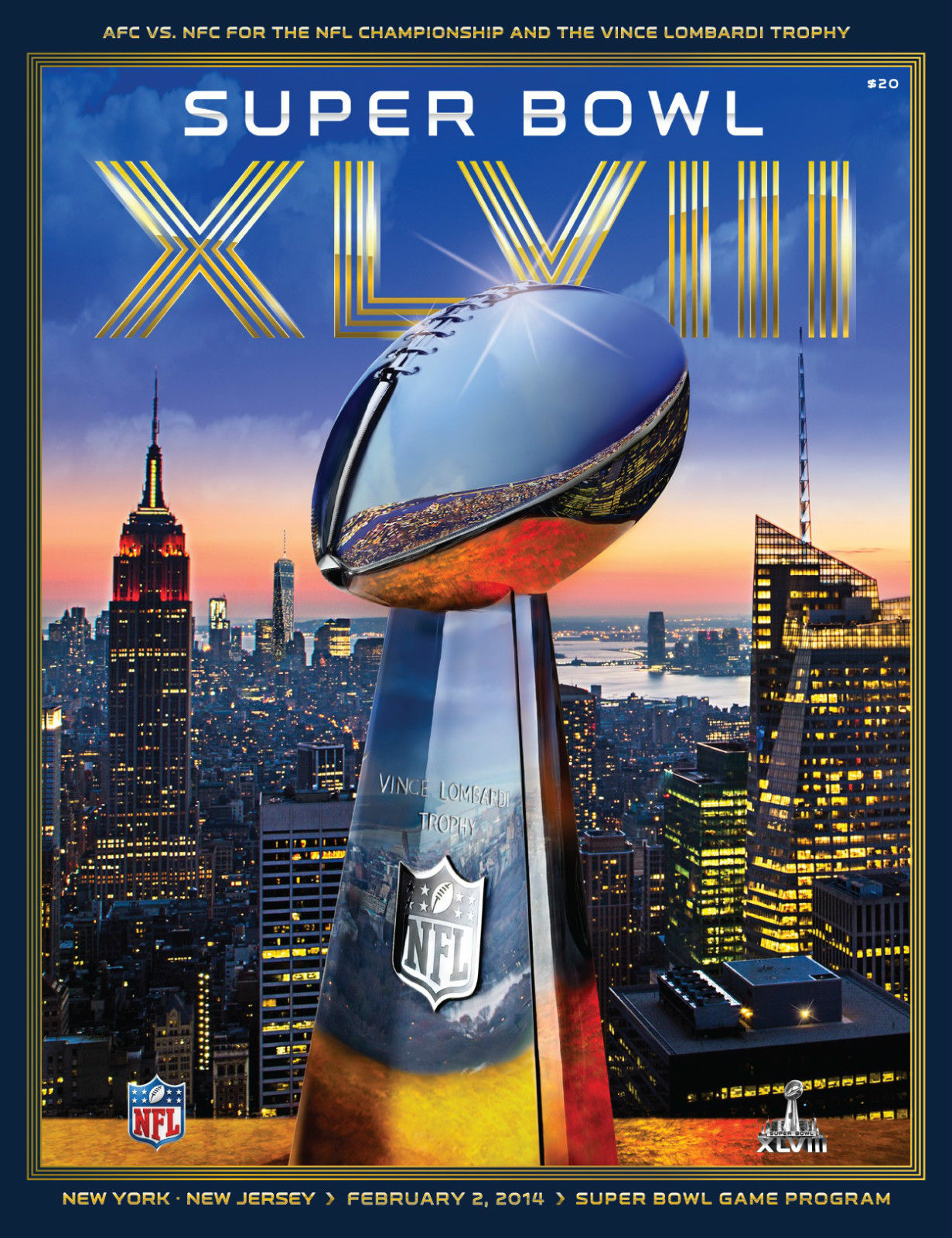
February 2, 2014, was supposed to be the night Peyton Manning cemented his legacy as the greatest ever. Instead, it became a 60-minute horror movie for the Denver Broncos. Most people remember the final score—43–8—but when you look at the actual super bowl 48 stats, the blowout feels even more surgical than you might recall.
It was the first time in 23 years that the NFL’s #1 scoring offense met the #1 scoring defense.
Everyone expected a chess match. We got a demolition.
Twelve seconds. That is how long it took for the narrative to flip. When the opening snap flew over Manning's head and into the end zone for a safety, it didn't just give Seattle a 2–0 lead; it set the record for the fastest score in Super Bowl history. Denver never recovered.
The Night the Legion of Boom Broke the Records
Honestly, the most shocking part of the super bowl 48 stats isn't the point total. It’s the efficiency of the destruction. Seattle became the first team in history to score on a safety, a kickoff return for a TD, and an interception return for a TD in the same Super Bowl. They basically found every possible way to put points on the board without even needing Russell Wilson to be a superhero.
Speaking of Wilson, he was incredibly efficient. He went 18-for-25 for 206 yards and two touchdowns. His passer rating sat at a cool 123.1.
But the real story? That defense.
Linebacker Malcolm Smith ended up with the MVP trophy, and he earned it. He had 9 tackles, a fumble recovery, and that iconic 69-yard pick-six that made it 22–0 before halftime. It was the first time a defensive player won the award in over a decade.
The Broncos' offensive line, which had been a brick wall all season, looked like they were standing in a draft. They gave up constant pressure, leading to Manning throwing two first-half interceptions. For a guy who threw 55 touchdowns in the regular season, seeing him look that human was jarring.
Diving into the Box Score Oddities
If you look at the raw yardage, you might be confused. Denver actually outgained Seattle in passing yards, 274 to 206.
Wait, what?
Yeah, Peyton Manning actually set a then-record with 34 completions. Demaryius Thomas set a record with 13 catches. But these were "empty calories" in the truest sense. Most of those yards came when the game was already 36–0.
Denver’s run game was nonexistent. They finished with just 27 rushing yards. You aren't winning a championship with 27 yards on the ground. Seattle, meanwhile, stayed balanced. Marshawn Lynch didn't have a monster 150-yard day—he had 39 yards and a score—but Percy Harvin’s 45 rushing yards on just two end-arounds kept Denver’s linebackers guessing all night.
Harvin was the X-factor nobody could account for. Beyond the rushes, his 87-yard kickoff return to start the second half was the dagger. It took 12 seconds off the clock.
There's that number again. Twelve seconds to start the game. Twelve seconds to start the second half.
Why the Super Bowl 48 Stats Still Matter Today
People still argue about where that 2013 Seahawks defense ranks all-time. When you hold the highest-scoring offense in the history of the sport to 8 points, you’ve got a pretty strong case for #1.
The Broncos averaged nearly 38 points per game that season. Seattle held them to nearly 30 points below their average.
The weather was supposed to be the big story. It was the first "cold-weather" outdoor Super Bowl, held at MetLife Stadium in New Jersey. But at kickoff, it was 49°F. It wasn't the wind or the snow that beat Denver. It was the speed.
The Seahawks’ secondary, the "Legion of Boom," played a brand of physical football that the league eventually changed the rules to stop. Richard Sherman, Earl Thomas, and Kam Chancellor didn't just cover receivers; they punished them. Kam Chancellor’s hit on Demaryius Thomas early in the game set a tone that stats can't quite capture, though the four turnovers Denver committed certainly do.
Summary of Key Team Totals
- Final Score: Seattle 43, Denver 8
- Turnovers: Denver 4, Seattle 0
- Time of Possession: Seattle 32:06, Denver 27:54
- First Downs: Seattle 17, Denver 18 (Proof that moving the chains doesn't mean much if you keep coughing up the ball)
What most people get wrong about this game is thinking it was a "fluke." It wasn't. Seattle led 22–0 at the half and 36–0 before Denver finally found the end zone on the final play of the third quarter. It was a wire-to-wire clinic.
If you want to understand modern defensive building, you have to look at these super bowl 48 stats. It proved that even a record-shattering passing attack can be neutralized by a secondary that wins the physical battle at the line of scrimmage.
To truly appreciate the dominance, watch the coaches' film of the Seattle secondary. Notice how rarely Manning had a clean window to the sticks. Even his "record" 34 completions were mostly underneath routes that the Seahawks were happy to give up before swarming for the tackle.
For those looking to analyze historical betting trends or defensive efficiency, this game remains the gold standard for "Defense Wins Championships." Study the turnover-to-point conversion rate—Seattle turned those four Denver miscues into 22 points. That is how you turn a close matchup into a historical blowout.
Check the individual tackle counts for the Seahawks' secondary; they didn't miss. They tackled in space, which is the "stat" that actually killed the Broncos' rhythm.
Actionable Insight: When evaluating "Greatest of All Time" offenses, always look at their performance against top-3 defenses in the postseason. As Super Bowl 48 showed, regular-season records often crumble when the pocket collapses and the secondary plays "press" coverage. For researchers, use the Pro-Football-Reference box score to see the drive-by-drive breakdown of how Seattle's field position was consistently bolstered by special teams.